


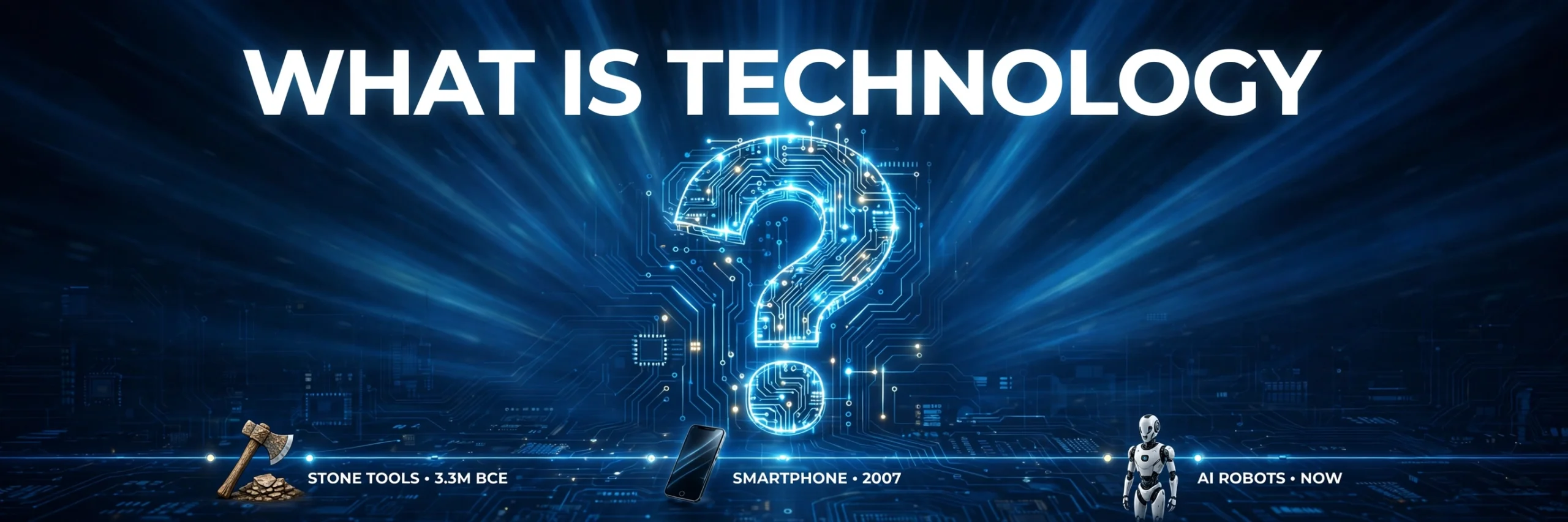
Technology is one of the most used words in the English language, yet few people can define it precisely. Is it just gadgets and apps? Does a hammer count as technology? What about a recipe? This guide gives you a clear, complete answer: what technology really means, where the word comes from, the main types, and how it shapes our lives in 2026.
What Is Technology? A Simple Definition
Technology is the practical application of scientific knowledge to solve problems and achieve human goals. In the simplest words: technology is the way people use tools, machines, systems, and methods to make life easier or do things that were impossible before. A smartphone is technology, but so is the wheel, the printing press, and a farming technique. If it helps humans do something better, it counts. Britannica defines it as the application of scientific knowledge to the practical aims of human life.
Where Does the Word Technology Come From?
The word technology comes from two Greek words: techne, meaning art, skill, or craft, and logos, meaning word or study. It entered English in the 17th century, first meaning the systematic study of crafts. Over centuries, its meaning broadened to cover the tools and methods themselves. Knowing this origin helps: technology was never only about electronics; it has always been about human skill applied through tools.
What Is Technology? Main Types
Information technology (IT): computers, software, the internet, and data systems.
Communication technology: phones, satellites, and networks that connect people.
Medical technology: MRI scanners, vaccines, surgical robots, and diagnostics.
Transportation technology: cars, trains, airplanes, and now electric and self-driving vehicles.
Energy technology: solar panels, wind turbines, batteries, and power grids.
Manufacturing technology: robotics, automation, and 3D printing.
Biotechnology: using living systems, from gene editing to lab-grown food.
Space technology: rockets, satellites, and exploration systems.
What Technology Does: Everyday Examples
Technology works quietly in every part of daily life. Communication: smartphones and video calls shrink distances. Healthcare: wearable devices track heart rates and warn of problems early. Education: online platforms bring classrooms to remote villages. Transportation: navigation apps route millions around traffic daily. Entertainment: streaming services deliver films to any screen on earth. Behind each convenience sits layers of technology working together.
What Is Technology vs Science? The Difference
Science and technology are partners, not twins. Science seeks to understand the world: why things happen. Technology uses that understanding to build useful things: how to make things happen. Scientists discovered electromagnetic waves; technologists built radio, television, and WiFi from that discovery. The European Space Agency puts it neatly: technology is the practical application of knowledge so that something entirely new can be done.
What Is Technology? Benefits and Drawbacks in 2026
Benefits: instant global communication, medical breakthroughs saving millions of lives, access to the world’s knowledge from a phone, automation of dangerous work, and tools that help disabled people live independently.
Drawbacks: privacy erosion as data is collected everywhere, job displacement from automation and AI, misinformation spreading at internet speed, e-waste polluting the planet, and growing dependence that leaves societies fragile when systems fail.
The honest view: technology is a multiplier of human intent. It makes good efforts more powerful and bad ones more dangerous, which is why governance and ethics matter as much as innovation.
Frequently Asked Questions
What is technology in simple words?
Technology is the use of knowledge, tools, and methods to solve problems and make human life easier. That is the simplest answer to what is technology.
What are the 7 types of technology?
The main types are information technology, communication technology, medical technology, transportation technology, energy technology, manufacturing technology, and biotechnology.
Is a hammer technology?
Yes. Technology includes any tool made with skill to achieve a goal, from stone hammers to smartphones.
What is the difference between science and technology?
Science discovers how the world works; technology applies that knowledge to build useful tools and systems. Understanding what is technology helps you see where science ends and engineering begins.
Final Words
Technology is far bigger than gadgets: it is humanity’s entire toolkit, from fire to artificial intelligence. Understanding what it really means helps us use it wisely and shape what comes next. For more explainers on the ideas changing our world, visit our tech news section.
