


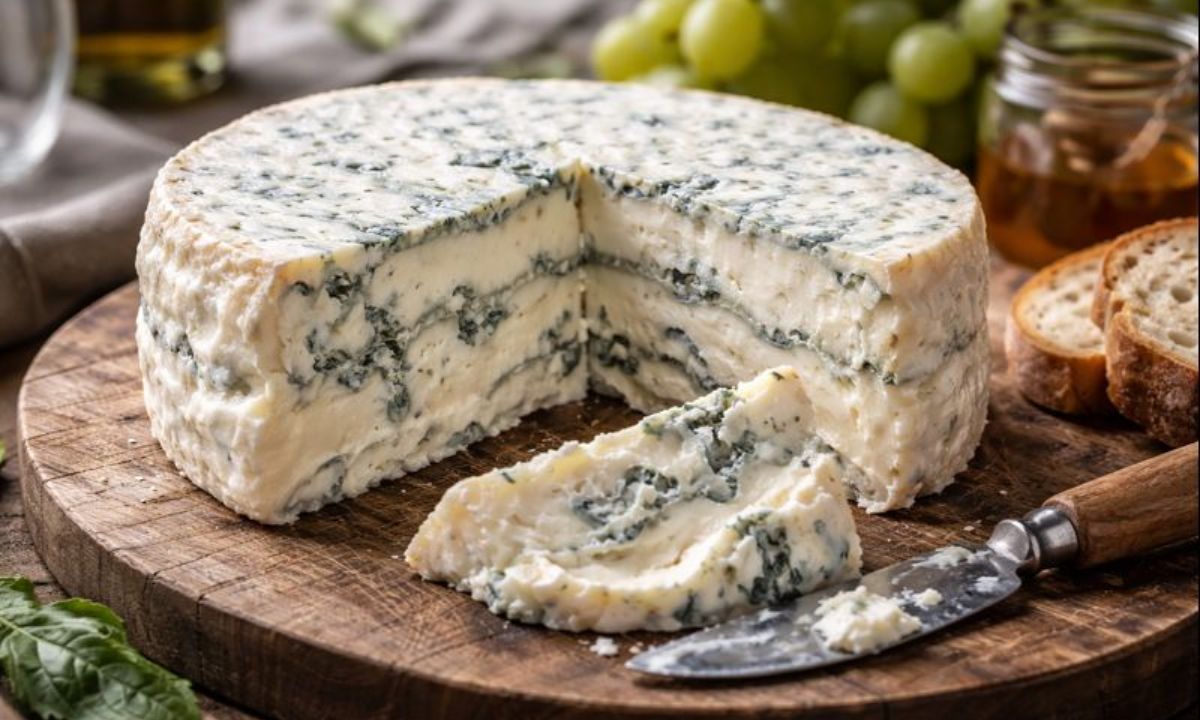
There’s a moment if you spend enough time around artisan cheese counters where someone slides a little wooden board in front of you and says, Just try it. Don’t ask what’s in it yet. That’s usually how people meet Masgonzola for the first time. One bite of something impossibly creamy, faintly funky, and deeply satisfying. Then the reveal: it’s a blend of mascarpone and Gorgonzola, two Italian dairy legends that, when folded together, create something entirely their own.
Masgonzola isn’t technically ancient. It doesn’t have centuries of monastery tradition behind it. But it has something just as compelling a flavor story that makes immediate, intuitive sense. Sweet and tangy. Silky and bold. Familiar, yet surprising.
This guide covers everything: where Masgonzola came from, how it’s made, what it tastes like, how to cook with it, how to store it, and yes why this blue-cream fusion cheese has somehow become a metaphor for modern creative identity. That last part is genuinely fascinating.
What Is Masgonzola, Exactly?
The name gives you the recipe: “Mas” from mascarpone, “gonzola” from Gorgonzola. Simple etymology, complex result.
Masgonzola is a gourmet cheese that artfully marries mascarpone a luxuriously smooth Italian cream cheese with Gorgonzola Dolce. The Dolce variety matters here. It’s the sweeter, younger, softer style of Gorgonzola not the aged, sharp, almost crumbly Piccante version that makes some people run from blue cheese. Using Gorgonzola Dolce means the funk is present but polite. It introduces itself without shouting.
The flavor is best described as rich, buttery, and tangy with a mild earthiness. It begins with the smooth sweetness of mascarpone, followed by the subtle tang and saltiness of blue cheese. Unlike more aggressive blues, the sharpness is balanced, making it suitable even for people who typically shy away from stronger cheeses.
That accessibility is part of what makes Masgonzola genuinely interesting as a cheese category. It’s a gateway a way in for people who want to like blue cheese but find the straight stuff overwhelming.
The Italian Roots of Masgonzola
Both parent cheeses trace back to Lombardy and Piedmont, the lush dairy heartland of northern Italy. Mascarpone comes from the regions around Milan and Lodi, where generations of cheesemakers learned to culture fresh cream into something borderline obscene in its richness. Gorgonzola one of the world’s oldest blue cheeses comes from a small town of the same name near Milan, though production now spans the broader Lombardy and Piedmont regions.
The story of Masgonzola starts around the early 2010s, when chefs in Milan began mixing mascarpone and Gorgonzola not for fame, but for flavor. Initially just an off-menu trick in niche kitchens, this blend turned heads with its rich-yet-funky personality. Word traveled fast through farmer’s markets and culinary blogs, and suddenly Masgonzola became more than a curiosity it was a conversation starter.
It’s worth noting that this isn’t a registered PDO (Protected Designation of Origin) product the way Parmigiano-Reggiano or Gorgonzola itself are. Masgonzola is a style of cheese, not a registered brand it refers to a blend of mascarpone and Gorgonzola, often found under names like blue-cream fusion or artisan soft mold blend. That looseness is actually part of what makes the concept travel well. Different cheesemakers bring different ratios, different intensities, different personalities.
How Masgonzola Is Made
The Mascarpone Base
Mascarpone production is deceptively simple: heat fresh cream, add a mild acid like lemon juice or tartaric acid, let it thicken, drain. The result is a cheese so high in fat that it barely qualifies as “cheese” in the traditional sense it’s closer to a firm cream. That fat content is exactly why it plays so beautifully as a buffer for Gorgonzola’s bite.
The Gorgonzola Component
A selected blue cheese variety often Gorgonzola Dolce is aged until it develops the desired flavor intensity. For Masgonzola purposes, you generally want younger Gorgonzola: enough complexity to register, not so much that it bulldozes everything else.
The Blend
The mascarpone and blue cheese are carefully combined, ensuring the marbling effect is preserved. Some producers do this by hand-folding to create a swirled, marbled interior. Others blend more thoroughly for a uniform texture. The marbled version is more visually dramatic on a cheese board. The blended version tends to be more consistent in every bite.
This is no quick-process cheese. Making Masgonzola requires skill and patience. The process starts with pasteurized cow’s milk, cultured and renneted like most traditional cheeses. Mascarpone is introduced early for richness, while Gorgonzola cultures come in later to spark that signature marbled funk. After the curds settle and mold develops, the cheese is aged slowly over weeks in humid, controlled rooms.
Flavor Profile: What to Actually Expect
Let’s be concrete here because creamy with a hint of blue” doesn’t quite capture it.
The initial taste is creamy and milky sweet. The mid-palate delivers a gentle tang from the blue cheese cultures. The finish brings a lingering savory depth without bitterness.
Temperature matters enormously. Straight from the fridge, Masgonzola is firm and the flavors are muted — you get cream, you get a whisper of blue. At room temperature (give it 15-20 minutes), it softens to something spreadable and the flavors open up considerably. That savory depth you were waiting for? It shows up then.
The texture is visually striking too. Its creamy ivory body is laced with dramatic deep-blue veins, creating an artistic marbling effect that makes it stand out on any cheese board. It’s soft and spreadable when at room temperature, perfect for smearing onto fresh bread or crackers.
Cooking with Masgonzola: Where It Actually Shines
This is where I’d argue Masgonzola earns its keep beyond the cheese board. It’s genuinely versatile one of those ingredients that pulls weight in both savory and (surprisingly) sweet applications.
Savory Uses
Pasta sauce Melt Masgonzola into a little cream over low heat. Toss with gnocchi or pappardelle. Add a grating of black pepper. That’s it. The blue cheese funk blooms when warm but stays elegant, never acrid.
Risotto Stir a generous spoonful into the final stage of a mushroom risotto instead of just butter and Parmesan. The mascarpone component adds richness; the Gorgonzola adds dimension. It’s become a restaurant staple for a reason.
Stuffed proteins Chicken breasts or pork loins stuffed with Masgonzola adds decadence and richness to any meal. The cheese melts into the meat as it cooks, basting from the inside.
Gourmet pizza and flatbreads A few dollops on a prosciutto and arugula pizza (added after baking, not before) gives you that creamy-tangy contrast against the peppery greens.
Crostini and charcuterie Masgonzola melts into risottos, elevates crostini with a drizzle of honey, or stars in modern charcuterie spreads. The honey pairing is particularly worth trying the sweetness amplifies the Gorgonzola’s earthiness in the best possible way.
Sweet Pairings
- Fresh figs and honey A classic for a reason. The fig’s jammy sweetness, the honey’s floral notes, and Masgonzola’s tang create a genuinely complex bite.
- Pears Sliced fresh or poached in red wine. The pear’s gentle sweetness softens the blue cheese notes.
- Dark chocolate This sounds odd until you try it. Pair Masgonzola with poached pears or dark chocolate for a sweet-savory masterpiece.
- Walnuts A natural complement to any blue cheese. The bitterness of the walnut creates contrast with the creamy mascarpone base.
The Quick Home Version
Can’t find Masgonzola at your local shop? Mix equal amounts of mascarpone and Gorgonzola and modify to your liking. To achieve the desired smoothness, mix with either a spoon or a food processor. You may also add some herbs and nuts or even cream for a textural addition.
A ratio of 60% mascarpone to 40% Gorgonzola tends to give a good balance for most palates. If you want something bolder, lean more Gorgonzola. If you’re serving guests who are blue-cheese-skeptical, go heavier on the mascarpone.
Masgonzola: Pros & Cons
The Good
- Accessible It bridges the gap between mild cream cheese and assertive blue cheese, making it a genuinely good entry point into the world of aged and mold-ripened cheeses.
- Versatile Works in pasta, on cheese boards, in desserts, as a spread. Not many cheeses do all of that.
- Visually impressive The marbling makes every cheese board look intentional.
- Easy to replicate at home Unlike complex aged cheeses, you can make a solid approximation in five minutes with two store-bought ingredients.
The Caveats
- Calorie-dense Mascarpone is extremely high in fat. Gorgonzola isn’t exactly lean either. Masgonzola is not a daily snack unless you’re portioning carefully.
- Not always available Masgonzola’s availability is expanding but it’s still most commonly found in specialty cheese shops, delis, artisan markets, and online gourmet retailers. You might have to work to find the real thing.
- Short shelf life Blended and stored Masgonzola kept in an airtight container can last 3 to 5 days in the refrigerator. It’s not a buy-in-bulk situation.
- Lactose content Since both mascarpone and Gorgonzola have moderate levels of lactose, people with low dairy tolerance should be cautious.
Storage and Serving Tips
A few practical notes that actually make a difference:
- Never use cling film Wrap with wax or parchment paper and place in a loosely sealed container; avoid cling film which can trap moisture and alter flavor.
- Bring it to room temperature before serving 15-20 minutes out of the fridge makes a noticeable difference in texture and flavor expression.
- Keep it away from strong-smelling foods Cheese absorbs odors. Store it separately in the fridge, not next to fish or strong produce.
- Don’t freeze it The mascarpone component doesn’t survive freezing well. The texture breaks down and becomes grainy.
- When shopping, ask about the ratio Ask vendors about the ratio of mascarpone to Gorgonzola, that will tell you how mild or assertive the cheese is.
Where to Buy Masgonzola
Finding real Masgonzola takes a little effort, but it’s worth it:
- Specialty cheese shops and Italian delis in major cities are the most reliable source. Staff there can usually tell you the producer and the ratio.
- Artisan markets and farmer’s markets Local cheesemakers experimenting with blended styles sometimes sell by the slice.
- Online gourmet retailers and cheese subscription boxes A solid option if you’re not near a specialty food district. Look for vendors who describe provenance.
- Chef-driven restaurants and bistros often include Masgonzola or similar blends on curated boards, which is actually a low-commitment way to try it first.
If none of those are accessible, the DIY route is genuinely good. Good mascarpone and good Gorgonzola Dolce from a regular supermarket will get you 85% of the way there.
Masgonzola Beyond the Kitchen
This is the part where things get a little unexpected.
Beyond food, the term Masgonzola has taken on a second life as a metaphor for creative contrast, eclectic combinations, and balanced contradictions. Whether used in fashion, design, digital branding, or cultural expression, Masgonzola has evolved into a symbol of intentional duality, the act of harmonizing opposites.
Developers describe intuitive tools with quirky visuals as “a bit Masgonzola. A minimalist app interface with 80s pixel art? Definitely. A voice assistant that cracks jokes while organizing your calendar? That’s the vibe.
It sounds like a stretch until you think about it: the cheese works precisely because two things that shouldn’t necessarily go together actually do, elegantly. That’s a useful idea. Opposites that don’t cancel each other out they amplify each other.
Chefs use it to describe flavor philosophy. Designers use it to describe style theory. Digital creators and influencers use it in bios, hashtags, and playlists to signal creative fusion.
Whether the metaphor sticks long-term is anyone’s guess. But the cheese? That’s here to stay.
Frequently Asked Questions
Is Masgonzola the same as regular Gorgonzola No. Gorgonzola is an aged blue-mold cheese on its own. Masgonzola is specifically a blend of Gorgonzola (usually the Dolce variety) and mascarpone. The mascarpone softens and sweetens the blue cheese considerably.
Can vegetarians eat Masgonzola It depends on the producer. Some Gorgonzola cheese commercially produced might use animal rennet, so for vegetarians, it’s best to check the label or stick to vegetarian alternatives. If making it at home, you can source vegetarian-rennet versions of both cheeses.
Is Masgonzola good for you In moderation, yes. Like most cheeses, Masgonzola is a rich source of calcium, protein, and healthy fats, and also provides small amounts of vitamins A and B12, which are important for vision, immunity, and nerve health. It’s also calorie-dense, so portion size matters.
What wine pairs best with Masgonzola Late-harvest whites are excellent, Sauternes, late-harvest Riesling, or a good Passito. The sweetness plays beautifully against the Gorgonzola’s earthiness. For reds, go lighter than you’d think, a Barbera d’Asti or light Nebbiolo. Avoid big, tannic reds; they overwhelm the mascarpone’s delicacy.
How is Masgonzola different from other cream-blue blends The specific pairing of mascarpone (not cream cheese, not ricotta) with Gorgonzola (not generic blue) gives Masgonzola its particular character. Mascarpone is higher in fat and has a more neutral, sweet flavor than cream cheese, which makes the Gorgonzola’s earthiness pop rather than getting muddled.
Can I use Masgonzola in baking Yes, thoughtfully. It melts beautifully into savory tarts and pastry fillings. In sweet applications, it can work in a cheesecake-style filling where the subtle tang is welcome. Avoid recipes that require firm, sliceable texture, the mascarpone component keeps it quite soft.
Final Thoughts
Masgonzola is the kind of cheese that rewards you for being curious. It’s not intimidating, that’s the whole point of its existence, but it’s not boring either. It occupies the genuinely interesting middle ground where accessible and complex stop being opposites.
If you’ve been cheese-curious but blue-cheese-hesitant, this is your on-ramp. If you already love Gorgonzola, you’ll find Masgonzola opens up applications you hadn’t considered, sauces, stuffings, desserts, where straight blue cheese would be too assertive.And if you can’t find it locally, spend five minutes folding good mascarpone and Gorgonzola Dolce together in a bowl. Add a drizzle of honey and some toasted walnuts. Put it on good bread.
